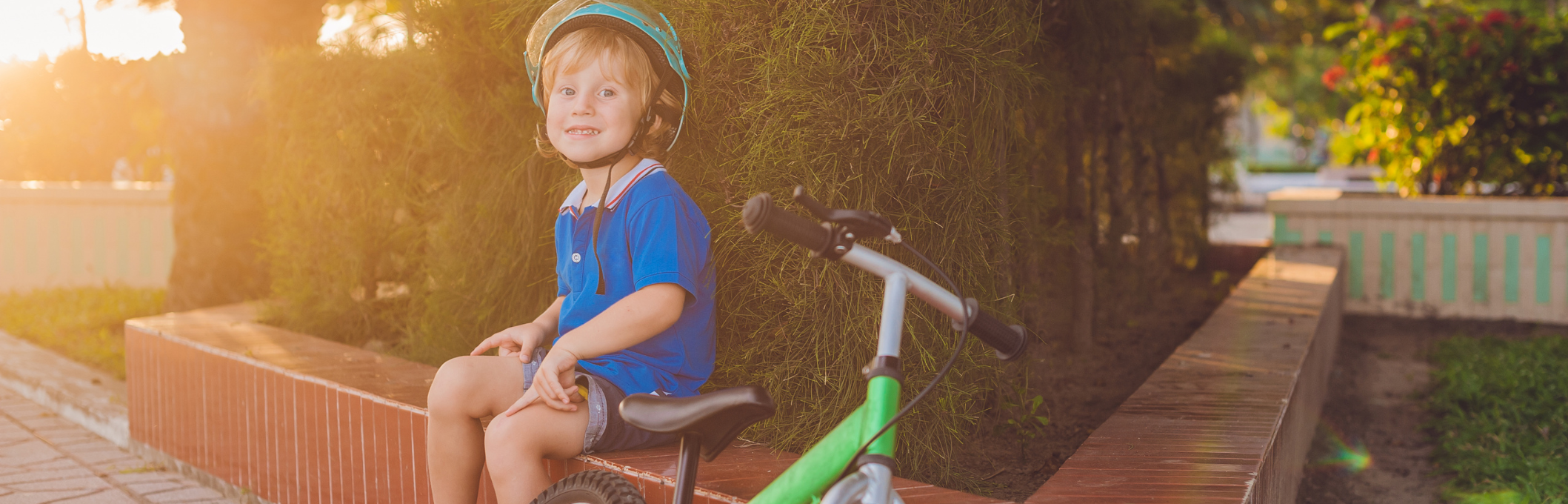
For several years now, even the youngest children have been zipping around on two wheels, entering the world of bicycles at a very early age. However, not on pedal bikes, but on balance bikes. The difference to Pedal bike is that your child keeps both feet on the ground at all times and moves forward by alternately pushing off with their feet. This movement, adapted to the natural walking motion of 1- to 4-year-olds, will be easy for your kids to achieve when choosing the right saddle height. So, your child isn't (yet) pedaling, but rather pushing themselves through the world. Since balance bikes for toddlers have become so popular, even the very youngest children (sometimes under one year old) can go on bike rides and have lots of fun riding around with family and friends.
The advantages of a balance bike
The advantages of a balance bike are obvious: The fact that your child can always put their feet on the ground makes the transition into the world of cycling much easier. It's easier to learn, the fun factor is immediately high, and you can get started right away, without the preliminary (sometimes frustrating) learning phase. However, even on a balance bike, some principles of safe cycling should be maintained – for more information, see our blog post "Guide to Bicycle Safety."
Once your little ones get used to the two-wheel principle, the barrier to transitioning to a bike without training wheels is much lower. Your child's sense of balance develops earlier and, more importantly, differently when using a balance bike than with training wheels. Your child develops a dynamic rather than a static sense of balance and learns how to shift their weight to turn right or left. Furthermore, it's clear from the start that their feet should be on the ground when stopping, which makes it easier to ride a pedal bike later on.
Does the balance bike have any disadvantages?
There aren't many disadvantages to balance bikes. Of course, your child will have to get used to a slightly different riding experience with pedals. This can take some time and be frustrating at first, especially because your child is used to the speed and feel of a balance bike. Your child may also have difficulty getting used to a Pedal bike No longer brake with your feet (in theory). For some children, it can be confusing at first to coordinate both the brakes and the pedals at the same time. But for most kids, the transition is quickly mastered, and nothing stands in the way of riding without training wheels and with pedals!
Source: Bike Club


teilen:
When can a child do what? Developmental psychological aspects
Help and information when buying a balance bike